Enterprise IT Solutions: Complete Guide for Modern Businesses
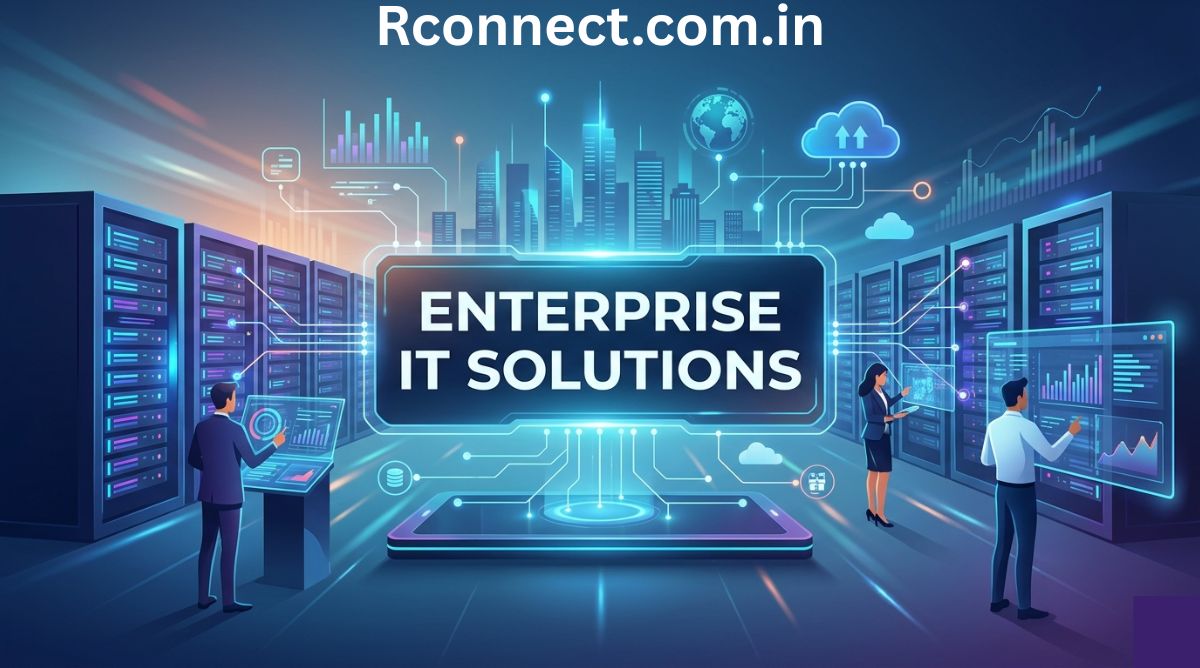
Enterprise IT solutions refer to advanced technology systems and services designed to support the complex operations of large organizations and enterprises. These solutions integrate software, hardware, networks, and digital infrastructure to help businesses manage their processes efficiently and effectively. Large organizations often deal with massive volumes of data, multiple departments, and global operations, which require reliable and scalable technology systems. Enterprise IT solutions provide the tools necessary to handle these challenges and ensure smooth business operations.
Modern enterprises rely heavily on information technology to coordinate activities, analyze business performance, manage resources, and communicate with customers and partners. Enterprise IT solutions help organizations automate tasks, streamline workflows, and improve decision-making through integrated digital platforms. As businesses grow and expand their operations, the need for comprehensive IT systems becomes increasingly important.
Importance of Enterprise IT Solutions
Enterprise IT solutions play a critical role in enabling organizations to operate efficiently in a competitive and fast-paced business environment. Large companies often have multiple departments such as finance, human resources, marketing, logistics, and customer service. Each department generates and uses large amounts of information that must be managed accurately and securely.
Enterprise IT solutions provide centralized platforms that allow organizations to collect, process, and analyze data from different departments. This centralized approach improves coordination and ensures that all teams have access to accurate and up-to-date information.
Another important aspect of enterprise IT solutions is automation. Many business processes involve repetitive tasks that consume valuable time and resources. By automating these tasks, organizations can reduce manual effort, minimize errors, and increase productivity. Automation also allows employees to focus on strategic activities that contribute to business growth.
Enterprise IT systems also enhance communication and collaboration within organizations. Digital platforms enable teams located in different offices or countries to share information, work together on projects, and coordinate their activities more effectively.
Components of Enterprise IT Solutions
Enterprise IT solutions consist of several key components that work together to support business operations. One of the most important components is enterprise software. Enterprise software includes applications that manage essential business functions such as finance, supply chain management, customer relationship management, and human resources.
Another important component is IT infrastructure. Infrastructure includes servers, storage systems, networks, and hardware devices that support digital operations. Reliable infrastructure ensures that applications run smoothly and that data can be accessed quickly and securely.
Data management systems are also essential components of enterprise IT solutions. These systems store and organize large volumes of information generated by business activities. Effective data management allows organizations to analyze trends, identify opportunities, and make informed decisions.
Cybersecurity systems are another critical component. Enterprises handle sensitive information such as customer data, financial records, and confidential business strategies. Strong security measures are necessary to protect this information from cyber threats and unauthorized access.
Enterprise Resource Planning Systems
Enterprise resource planning systems are among the most widely used enterprise IT solutions. These systems integrate various business functions into a single platform that allows organizations to manage their operations efficiently.
An enterprise resource planning system typically includes modules for finance, procurement, manufacturing, inventory management, and human resources. By integrating these functions, organizations can eliminate data silos and improve coordination between departments.
For example, when a sales order is placed, the system can automatically update inventory levels, generate invoices, and schedule production if necessary. This level of integration reduces manual work and ensures that information flows seamlessly across the organization.
Enterprise resource planning systems also provide real-time insights into business performance. Managers can monitor key metrics, track progress toward goals, and make informed decisions based on accurate data.
Customer Relationship Management Systems
Customer relationship management systems are another important part of enterprise IT solutions. These systems help organizations manage interactions with customers, track sales activities, and improve customer service.
A customer relationship management system stores information about customer preferences, purchase history, and communication records. This information helps businesses understand their customers better and provide personalized services.
Sales teams use these systems to manage leads, track opportunities, and monitor sales performance. Marketing teams use customer data to create targeted campaigns and measure the effectiveness of their strategies. Customer service representatives use the system to resolve issues quickly and maintain strong relationships with clients.
By centralizing customer information, organizations can provide consistent and efficient services that improve customer satisfaction and loyalty.
Cloud Based Enterprise IT Solutions
Cloud computing has significantly transformed enterprise IT solutions. Cloud-based systems allow organizations to store data and run applications on remote servers rather than maintaining physical infrastructure on-site.
Cloud platforms provide several advantages for enterprises. One of the main benefits is scalability. Organizations can easily increase or decrease their computing resources based on their needs. This flexibility allows businesses to handle growth and changing workloads without major infrastructure investments.
Cloud-based enterprise IT solutions also support remote work and global collaboration. Employees can access systems and data from any location with an internet connection. This capability has become especially important as businesses adopt flexible work environments.
Another advantage is cost efficiency. Instead of purchasing and maintaining expensive hardware, organizations can pay for cloud services based on usage. This model allows enterprises to manage their IT budgets more effectively.
Cybersecurity in Enterprise IT Solutions
Cybersecurity is a critical aspect of enterprise IT solutions because large organizations are often targets of cyberattacks. Security systems protect digital assets, prevent unauthorized access, and ensure the integrity of sensitive information.
Enterprise cybersecurity measures include firewalls, encryption, intrusion detection systems, and identity management tools. These technologies help detect and prevent threats such as malware, phishing attacks, and data breaches.
Regular security audits and monitoring are also essential. IT teams continuously analyze network activity to identify suspicious behavior and respond quickly to potential threats.
Employee awareness is another important element of cybersecurity. Training programs help staff recognize potential risks and follow safe practices when handling digital information. Strong cybersecurity practices protect the organization’s reputation and maintain the trust of customers and partners.
Benefits of Enterprise IT Solutions
Enterprise IT solutions provide numerous benefits for large organizations. One of the most significant advantages is improved operational efficiency. By integrating different business processes into unified systems, enterprises can reduce duplication of work and streamline their workflows.
Another benefit is improved data accuracy. Centralized systems ensure that all departments access the same information, reducing inconsistencies and errors. Accurate data allows managers to make better decisions and respond quickly to changing business conditions.
Enterprise IT solutions also support scalability and growth. As organizations expand their operations, they require systems capable of handling increased workloads and new processes. Enterprise solutions are designed to grow alongside the business.
Improved customer experience is another key benefit. With integrated customer data and efficient communication systems, businesses can provide faster and more personalized services.
Enterprise IT Solutions in Different Industries
Many industries rely on enterprise IT solutions to manage their operations and remain competitive. In the healthcare industry, enterprise systems manage patient records, hospital operations, and medical data analysis. These systems improve efficiency while ensuring compliance with strict data protection regulations.
Financial institutions use enterprise IT solutions for secure transaction processing, risk management, and financial reporting. These systems help banks manage large volumes of transactions while maintaining high levels of security.
Retail companies use enterprise IT platforms to manage inventory, track sales, and coordinate supply chains. These systems allow retailers to respond quickly to market demand and improve customer satisfaction.
Manufacturing organizations rely on enterprise solutions to monitor production processes, manage equipment, and coordinate logistics. These systems help manufacturers optimize resource usage and maintain product quality.
Education institutions also use enterprise IT systems to manage student information, academic programs, and administrative operations.
Challenges in Implementing Enterprise IT Solutions
Implementing enterprise IT solutions can be complex and requires careful planning. One challenge is the integration of new systems with existing technologies. Organizations must ensure that different platforms can communicate effectively and share data without disruptions.
Another challenge is cost. Enterprise IT projects often involve significant investments in technology, training, and infrastructure. However, these investments usually provide long-term benefits through improved efficiency and productivity.
User adoption is another factor to consider. Employees must be trained to use new systems effectively. Without proper training and support, organizations may not fully benefit from their enterprise IT solutions.
Future of Enterprise IT Solutions
The future of enterprise IT solutions will be shaped by emerging technologies and evolving business needs. Artificial intelligence and machine learning are expected to play an increasingly important role in enterprise systems. These technologies can analyze large datasets, identify patterns, and support intelligent decision-making.
Automation will continue to expand across enterprise platforms. Advanced automation tools will handle routine tasks and streamline complex workflows, allowing employees to focus on strategic activities.
The use of big data analytics will also increase. Enterprises will rely on sophisticated analytics tools to gain deeper insights into customer behavior, market trends, and operational performance.
Cloud computing will remain a major component of enterprise IT solutions, providing flexible and scalable infrastructure for organizations of all sizes.
Conclusion
Enterprise IT solutions are essential for modern organizations that manage complex operations and large volumes of information. By integrating software applications, infrastructure, data management systems, and cybersecurity tools, these solutions enable enterprises to operate efficiently and adapt to changing business environments.
Through automation, centralized data management, and advanced analytics, enterprise IT solutions help organizations improve productivity, enhance decision-making, and deliver better services to customers. As technology continues to evolve, enterprises will increasingly rely on innovative IT systems to support growth, maintain competitiveness, and achieve long-term success in the global marketplace.